

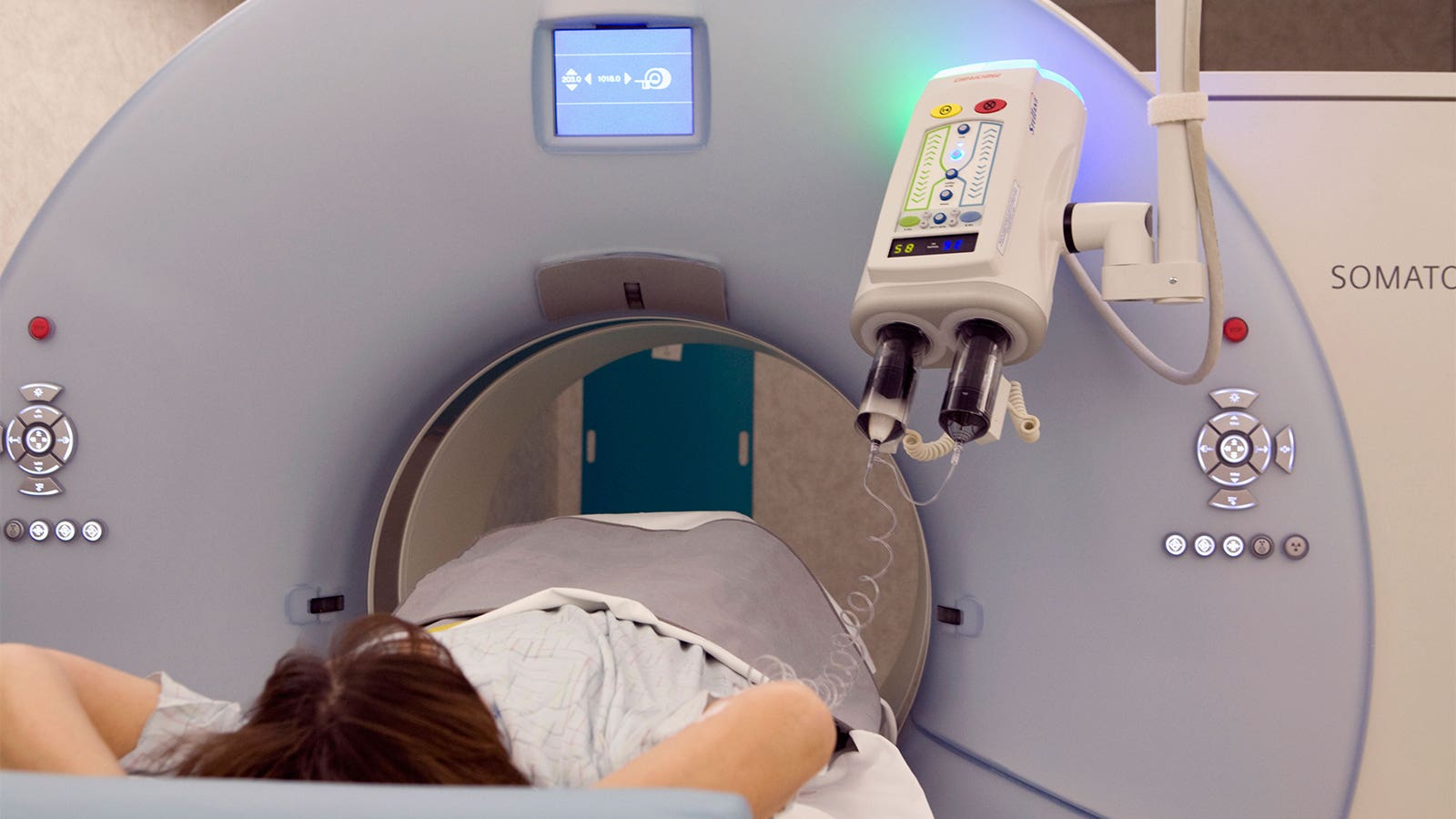
A comprehensive study involving over 700,000 CT scans using iodinated contrast media revealed an anaphylaxis rate of just 0.02%. Among these incidents, 10% necessitated three or more epinephrine doses or the start of intravenous epinephrine, while 13% posed immediate life-threatening risks. Experts emphasize the critical importance of swift identification and intervention, cautioning against excessive dependence on premedication protocols.
Severe Patterns in Contrast-Induced Anaphylaxis
Although anaphylactic responses to iodinated contrast media (ICM) occur infrequently, the instances that arise frequently exhibit a perilous trajectory, featuring persistent or recurrent symptoms that resist standard therapies, according to an extensive review of clinical data.
Researchers led by Eduardo Saadi Neto, MD, from the Mayo Clinic in Rochester, Minnesota, examined data from more than 700,000 CT procedures involving ICM. They documented an overall anaphylaxis occurrence of 0.02%, translating to 20.3 incidents per 100,000 scans or 47.9 per 100,000 patients, as detailed in the Annals of Allergy, Asthma & Immunology.
The majority of these events followed the conventional monophasic pattern, where symptoms resolved promptly following allergen removal and targeted medical care. However, four cases-representing 3% of the total-manifested as biphasic reactions. In these, hypersensitivity symptoms reemerged after the initial episode had subsided, even without renewed exposure to the contrast agent. These recurrences happened at a median interval of 16.5 hours post-initial reaction, and each qualified as full anaphylaxis upon return.
Additionally, 14 cases, or 10%, were deemed refractory anaphylaxis. These demanded at least three doses of epinephrine or the administration of intravenous epinephrine combined with supportive symptom management. Furthermore, life-threatening anaphylaxis, classified as Dribin Grade 5, affected 19 individuals, equating to 2.7 cases per 100,000 scans.
The study authors warned that, despite the rarity of ICM-triggered anaphylaxis, a notable fraction proves profoundly severe, necessitating vigilant and immediate diagnostic and therapeutic responses.
Fatalities and Historical Comparisons
One instance of refractory anaphylaxis proved fatal, yielding a mortality rate of 0.14 deaths per 100,000 scans. This unfortunate patient had a documented prior episode of contrast-related urticaria without additional symptoms and did not undergo premedication with corticosteroids and antihistamines-a protocol advised for those with past moderate to severe allergic responses to ICM when alternatives are unavailable.
This observed fatality rate marks an improvement over earlier research from the 1990s, which cited figures ranging from 0.21 to 0.39 per 100,000 scans. Neto and team attribute this progress to the adoption of safer ICM formulations and enhanced protocols for managing anaphylactic events.
Premedication Practices and Limitations
Among 35 patients with previous contrast reactions, 23 (66%) received prophylactic treatments prior to their scans. These regimens primarily consisted of steroids alone (48%) or combined with antihistamines (39%), though 13% received antihistamines solely. Many unmedicated cases that progressed to anaphylaxis involved patients whose prior reactions were mild, such as isolated itching or hives, leading clinicians to forgo prophylaxis.
The analysis lacked records on whether patients received a different ICM agent from their previous reactive exposure, a strategy shown to outperform premedication in averting repeat allergies. Guidelines do not endorse premedication if ICM substitution is feasible.
The researchers concluded that their observations highlight the erratic and potentially grave nature of contrast reactions, even post-premedication, stressing meticulous risk evaluation and adherence to proven prevention measures.
Study Design and Patient Demographics
This retrospective, single-center observational investigation encompassed 702,917 CT scans with ICM conducted from January 2014 to November 2024. These spanned outpatient clinics, inpatient wards, and emergency departments at Mayo Clinic Hospital. The team conducted thorough manual reviews of medical charts to identify anaphylaxis cases aligning with National Institute of Allergy and Infectious Diseases/Food Allergy and Anaphylaxis Network criteria.
Across 143 anaphylaxis patients of varying ages, the predominant ICM agents were iohexol (66%), iopromide (17%), and iodixanol (3%). Notably, 27% had no prior ICM exposure, while 49% had previously received ICM without allergic issues. Most reactions (69%) transpired in outpatient environments, 28% in emergency settings, and a small number among inpatients.
Recommendations for Radiology Preparedness
Co-author Ronna Campbell, MD, PhD, also of the Mayo Clinic, advised that outpatient facilities and imaging centers maintain instant access to epinephrine, capability for infusions if required, and well-organized emergency kits. Given the infrequency of these events, she advocated for simulation-based training to optimize team responses. Ultimately, patient safety hinges on prompt recognition and action rather than premedication alone.
Risk Factors and Treatment Adherence
Advanced age emerged as the sole significant predictor of severe anaphylaxis, with a relative risk of 1.13 per five-year increment (95% CI 1.01-1.26). No meaningful links appeared with asthma or prior medication allergies.
Strikingly, only about half of anaphylaxis patients received epinephrine, with even lower compliance in outpatient contexts. The authors suggested this discrepancy may stem from variations in staff training, expertise, and medication availability. Additionally, initial mild or unusual symptoms might delay diagnosis, causing hesitation in epinephrine use.
Campbell reinforced that preparedness for swift intervention surpasses premedication reliance, as communicated to MedPage Today.
Study Limitations and Broader Implications
The research acknowledged potential oversights, such as undetected mild biphasic reactions, since many patients were discharged soon after without extended 48-hour monitoring-the window for such episodes. Consequently, some may have been handled outside the facility or unreported. Generalizability could be limited by the single-center design, and diagnostic categorizations involved some subjectivity, particularly in differentiating physiologic responses from genuine anaphylaxis.
These insights collectively urge radiology departments to prioritize robust emergency readiness, enhancing outcomes in these uncommon yet high-stakes scenarios.