
A groundbreaking medication for sepsis has achieved significant success in a pivotal human clinical trial, offering renewed optimism for the development of the first truly effective therapy against a disease responsible for millions of deaths annually worldwide.
On January 30, 2026, researchers from Griffith University announced that their innovative drug demonstrated remarkable efficacy in alleviating sepsis symptoms during a Phase II clinical study that enrolled 180 patients. This carbohydrate-derived compound functions by mitigating the excessive immune response that frequently precipitates catastrophic organ failure. In the absence of any dedicated treatments specifically targeting sepsis, these results represent a monumental advancement in medical science. The research team is now gearing up for the subsequent Phase III trials to build on this momentum.

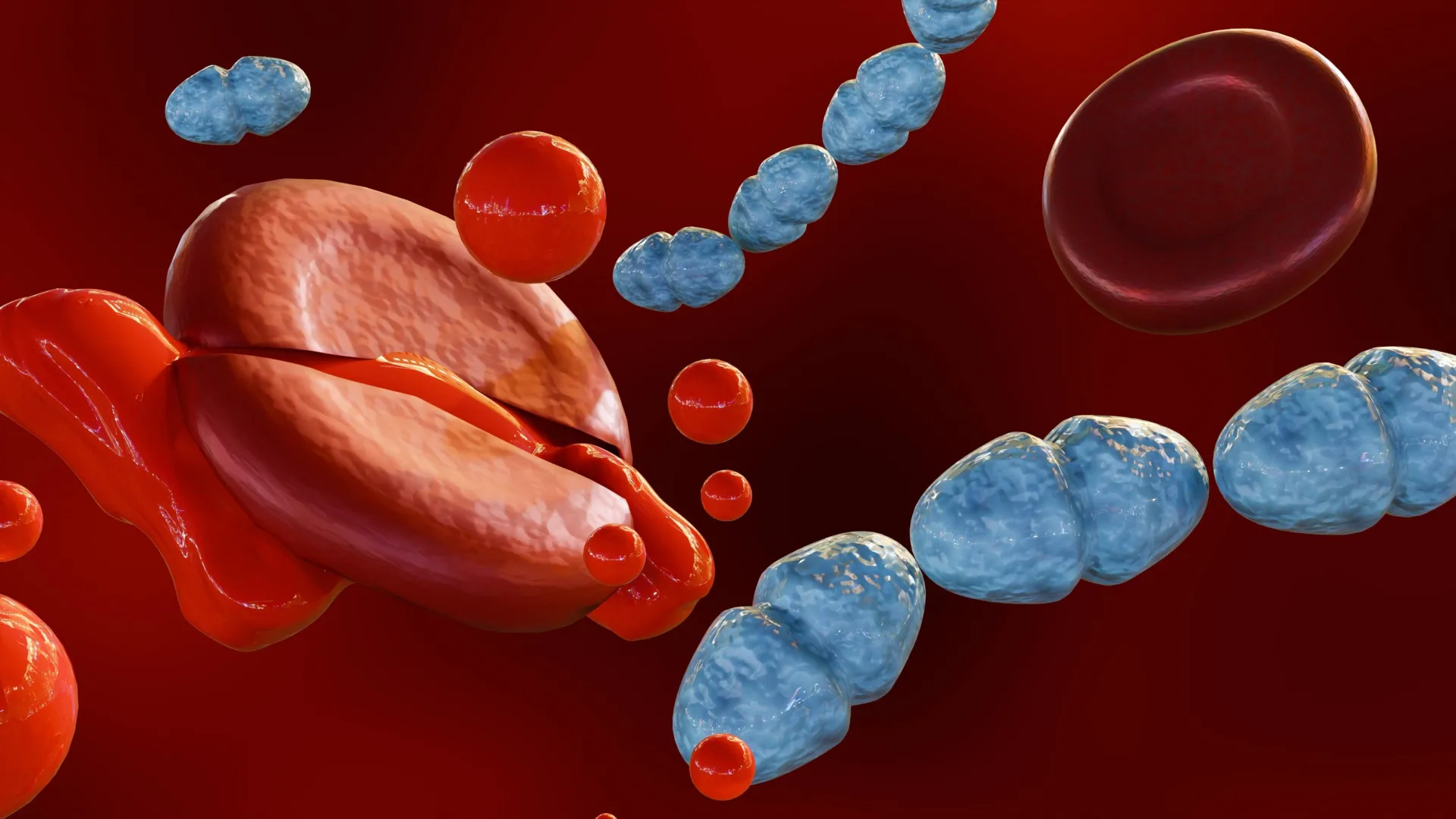
An innovative pharmaceutical agent has effectively diminished the impact of sepsis in human subjects by neutralizing the body’s harmful hyperactive immune response. Experts believe this could emerge as the pioneering precision therapy for what remains one of the most lethal acute medical crises globally. The image depicts this mechanism, courtesy of Shutterstock.
Scientists based at Griffith University have shared highly encouraging developments in the battle against sepsis following the successful completion of a Phase II clinical trial conducted in China. The trial’s outcomes indicate that this novel drug candidate possesses the potential to lessen the intensity of sepsis, a life-threatening condition that impacts countless hospitalized individuals around the world every single year.
The investigational therapy, designated as STC3141, represents a carbohydrate-based innovation born from a strategic partnership between Distinguished Professor Mark von Itzstein AO and his colleagues at Griffith’s Institute for Biomedicine and Glycomics, alongside Professor Christopher Parish and his group at The Australian National University.
Professor von Itzstein emphasized, “The trial successfully achieved its primary endpoints, confirming that the drug candidate effectively reduced sepsis manifestations in human participants.”
How STC3141 Functions Within the Human Body
In the course of the clinical evaluation, STC3141 was administered intravenously via a cannula infusion. This drug was meticulously engineered to neutralize the massive release of a critical biological molecule that characterizes sepsis, a cascade which triggers extensive inflammation and subsequent harm to vital organs throughout the body.
As a compact small-molecule therapeutic, STC3141 holds promise not merely for symptom control but for actively repairing organ damage inflicted by the sepsis process, potentially altering the prognosis for affected patients in profound ways.
The Persistent Challenge of Sepsis in Modern Medicine
Sepsis arises when an individual’s immune system responds excessively to an underlying infection, inadvertently attacking and compromising the body’s own healthy tissues and organs. This devastating syndrome ranks among the foremost contributors to mortality and enduring disabilities on a global scale.
Distinguished Professor von Itzstein elaborated, “If sepsis is not identified in its early stages and addressed with urgency, it rapidly escalates to septic shock, multi-organ dysfunction, and ultimately, fatal outcomes.”
Comprehensive Overview of the Clinical Trial and Future Directions
Grand Pharmaceutical Group Limited, known as Grand Pharma, spearheaded the Phase II trial, which involved a cohort of 180 patients who had been clinically diagnosed with sepsis. Given the enormous worldwide burden of this illness and the stark reality that no targeted anti-sepsis interventions exist to date, this development addresses a critical gap in healthcare provisions.
According to Professor von Itzstein, Grand Pharma intends to advance STC3141 into a comprehensive Phase III trial to rigorously assess its therapeutic benefits on a larger scale. “We anticipate that this treatment could be commercialized within just a few years, with the capacity to preserve millions of lives across the globe,” he added optimistically.
Wider Implications and Enthusiasm from the Research Community
Professor Paul Clarke, who serves as the Executive Director of the Institute for Biomedicine and Glycomics, expressed profound excitement regarding the trial’s achievements. “I am absolutely delighted by these trial results, which hold the potential to safeguard countless lives,” stated Professor Clarke.
He continued, “At our Institute, we are committed to advancing translational research initiatives that yield tangible, immediate benefits not only within Australia but also on an international level, fundamentally improving patient outcomes and transforming healthcare landscapes everywhere.”
This collaborative effort underscores the power of interdisciplinary partnerships in tackling some of medicine’s most intractable problems. The success of STC3141 in Phase II not only validates years of painstaking laboratory work but also paves the way for broader applications in critical care settings. Sepsis, often dubbed the “silent killer” due to its rapid progression and high mortality rates-estimated at around 20-30% even with optimal supportive care-desperately needs such innovations. By specifically targeting the dysregulated immune cascade rather than relying solely on broad-spectrum antibiotics or supportive measures, STC3141 introduces a paradigm shift. Future studies will likely explore its efficacy across diverse patient populations, including those with varying infection sources like pneumonia, urinary tract infections, or abdominal sepsis, ensuring its robustness in real-world scenarios.
The involvement of Grand Pharma, a leader in biopharmaceutical development, further bolsters confidence in the drug’s trajectory toward regulatory approval. Their expertise in scaling up production and navigating complex clinical pathways will be invaluable as Phase III commences, potentially involving thousands of participants across multiple continents for enhanced statistical power and generalizability.
Ultimately, the journey of STC3141 from concept to clinic exemplifies the fruits of sustained investment in glycomics research-a field that harnesses the power of carbohydrates, often overlooked in favor of protein or nucleic acid-based therapies. This milestone reaffirms Griffith University’s position at the forefront of biomedical innovation, inspiring similar endeavors worldwide.