

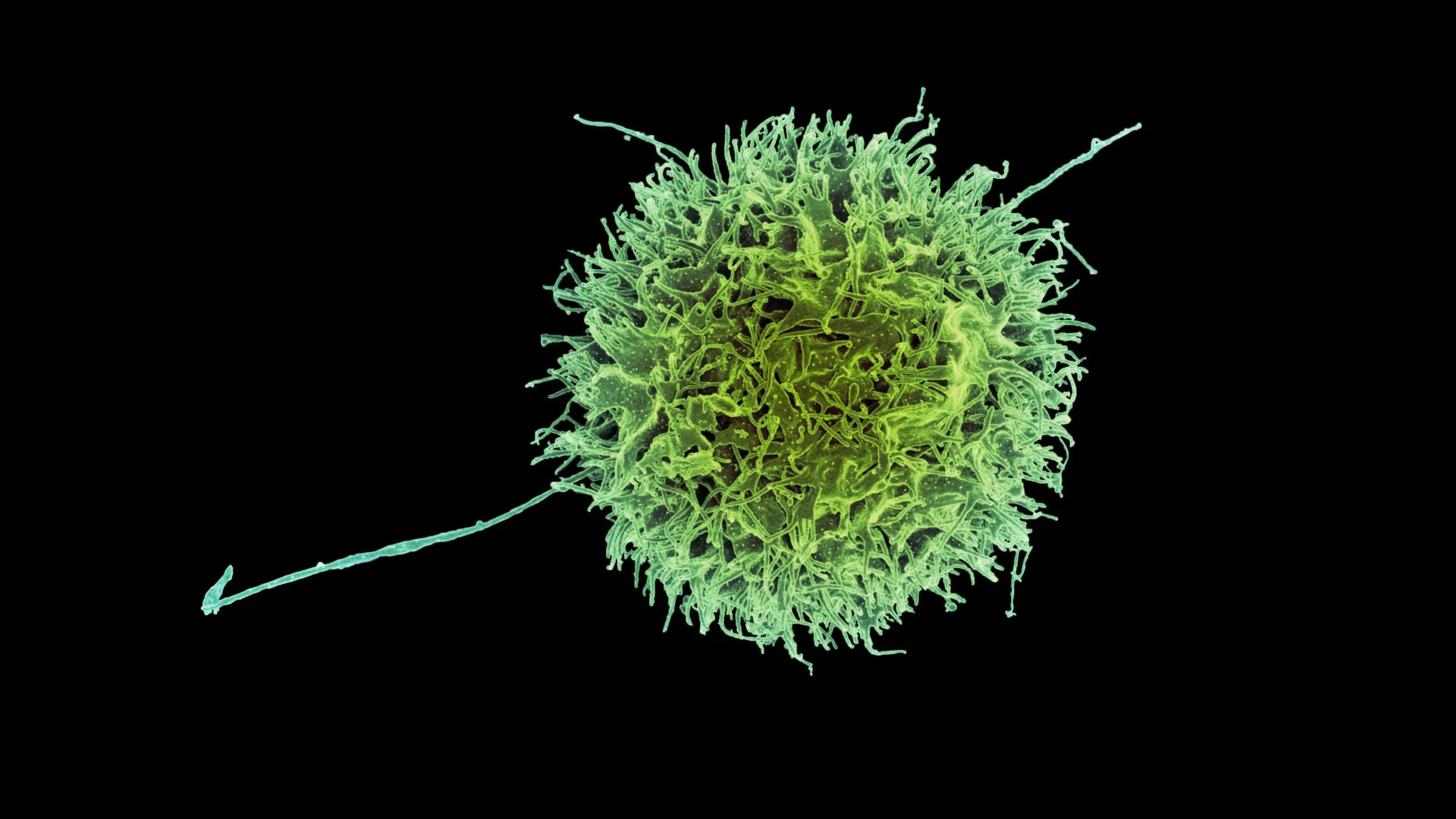
Researchers have pioneered an innovative immune-based approach to cancer treatment by developing enhanced CAR-NK cells, which are genetically engineered natural killer cells. Similar to the well-known CAR-T cells, these advanced immune cells are designed to detect and eliminate cancer cells, but they utilize a distinct category of immune cells that inherently seek out and destroy abnormal or virus-infected cells.
A collaborative group of scientists from MIT and Harvard Medical School has devised a superior technique for modifying CAR-NK cells, significantly minimizing the risk of rejection by the patient’s immune system. Such rejection has long been a primary obstacle in cell therapies, frequently diminishing their therapeutic impact.
This breakthrough holds the potential to enable the creation of readily available “off-the-shelf” CAR-NK therapies, which could be administered right after a cancer diagnosis, eliminating the need for weeks-long waits associated with personalized cell engineering. Conventional production processes for both CAR-NK and CAR-T therapies generally demand several weeks of preparation before infusion into patients.
“This method allows us to perform single-step engineering of CAR-NK cells that evade rejection from the host’s T cells and other immune components. Moreover, these cells exhibit superior cancer-killing efficiency and enhanced safety,” explained Jianzhu Chen, a professor of biology at MIT, affiliate of the Koch Institute for Integrative Cancer Research, and one of the study’s senior authors.
In experimental trials involving mice equipped with humanized immune systems, these novel engineered cells effectively eradicated the majority of cancer cells while successfully sidestepping assaults from the host’s native immune responses.
Rizwan Romee, associate professor of medicine at Harvard Medical School and the Dana-Farber Cancer Institute, served as another senior author on the paper, which appeared in Nature Communications. The primary author, Fuguo Liu, is a postdoctoral researcher at the Koch Institute and a research fellow at Dana-Farber.
Evading Detection by the Immune System
Natural killer (NK) cells play a crucial role in the innate immune system, specializing in the detection and elimination of cancerous cells and those infected by viruses. They achieve this by undergoing degranulation, a mechanism that deploys perforin, a potent protein which breaches the target cell’s membrane, ultimately causing cell death.
For generating CAR-NK cells intended for therapy, clinicians usually start by drawing a blood sample from the patient. From this, NK cells are isolated and genetically altered to produce a chimeric antigen receptor (CAR), a custom protein tailored to bind specific antigens present on cancer cells.
Following modification, these cells are cultured in the laboratory for multiple weeks to achieve sufficient numbers for reinfusion into the patient. This protocol mirrors the one employed for CAR-T therapies, several of which have gained regulatory approval for treating hematological malignancies such as lymphoma and leukemia. In contrast, CAR-NK therapies remain in the experimental phase of clinical testing.
The time-intensive process of expanding patient-derived CAR-NK cells, coupled with potential inadequacies in the quality of the patient’s own cells, has prompted researchers to investigate alternatives like deriving NK cells from healthy donors. Such donor cells could be produced in large quantities and kept in readiness for immediate deployment. Nevertheless, a significant hurdle persists: the recipient’s immune system frequently perceives these allogeneic cells as intruders and eliminates them prior to their engagement with the tumor.
In their recent investigation, the MIT researchers focused on overcoming this barrier by enabling NK cells to remain undetected by the immune surveillance. Their findings revealed that the absence of HLA class 1 molecules on the cell surface prevents attacks from host T cells. These molecules typically serve as “self” identifiers, signaling to the immune system that a cell is part of the body.
Building on this discovery, the team incorporated siRNA sequences—short interfering RNAs—that suppress the expression of genes encoding HLA class 1 proteins. In conjunction with this modification, they integrated the CAR gene and an additional gene coding for either PD-L1 or single-chain HLA-E (SCE), both of which bolster the NK cells’ capacity to combat cancer.
By assembling all these genetic elements into one cohesive DNA construct, the scientists achieved highly efficient transformation of donor NK cells into CAR-NK cells capable of immune evasion. Applying this strategy, they produced cells targeted against CD19, a surface protein prevalent on cancerous B cells in lymphoma.
Unleashing the Full Potential of NK Cells
The team evaluated these advanced CAR-NK cells in mouse models featuring humanized immune systems, which were also engrafted with lymphoma cells.
In mice treated with the newly designed CAR-NK cells, the engineered NK cell populations persisted for a minimum of three weeks, successfully eradicating nearly all cancer cells. Conversely, mice receiving either unmodified NK cells or those engineered solely with the CAR gene experienced rapid clearance of the donor NK cells by the host immune system. In those cases, the NK cells vanished within two weeks, permitting unchecked tumor progression.
Additionally, the study demonstrated that these optimized CAR-NK cells posed a substantially lower risk of triggering cytokine release syndrome, a severe and potentially fatal adverse reaction often associated with immunotherapies.
Given the improved safety characteristics of CAR-NK cells, Chen predicts they may supplant CAR-T cells in clinical practice moving forward. For ongoing CAR-NK developments aimed at lymphoma or diverse cancers, integrating this novel construct could be straightforward, according to him.
Looking ahead, the researchers plan to initiate clinical trials for this technology in partnership with Dana-Farber colleagues. They are likewise collaborating with a nearby biotechnology firm to explore CAR-NK applications in lupus treatment, where the immune system erroneously targets the body’s own healthy tissues and organs.
Funding for this work was partially provided by Skyline Therapeutics, the Koch Institute Frontier Research Program via the Kathy and Curt Marble Cancer Research Fund and the Elisa Rah Memorial Fund, the Claudia Adams Barr Foundation, and the Koch Institute Support (core) Grant from the National Cancer Institute.