

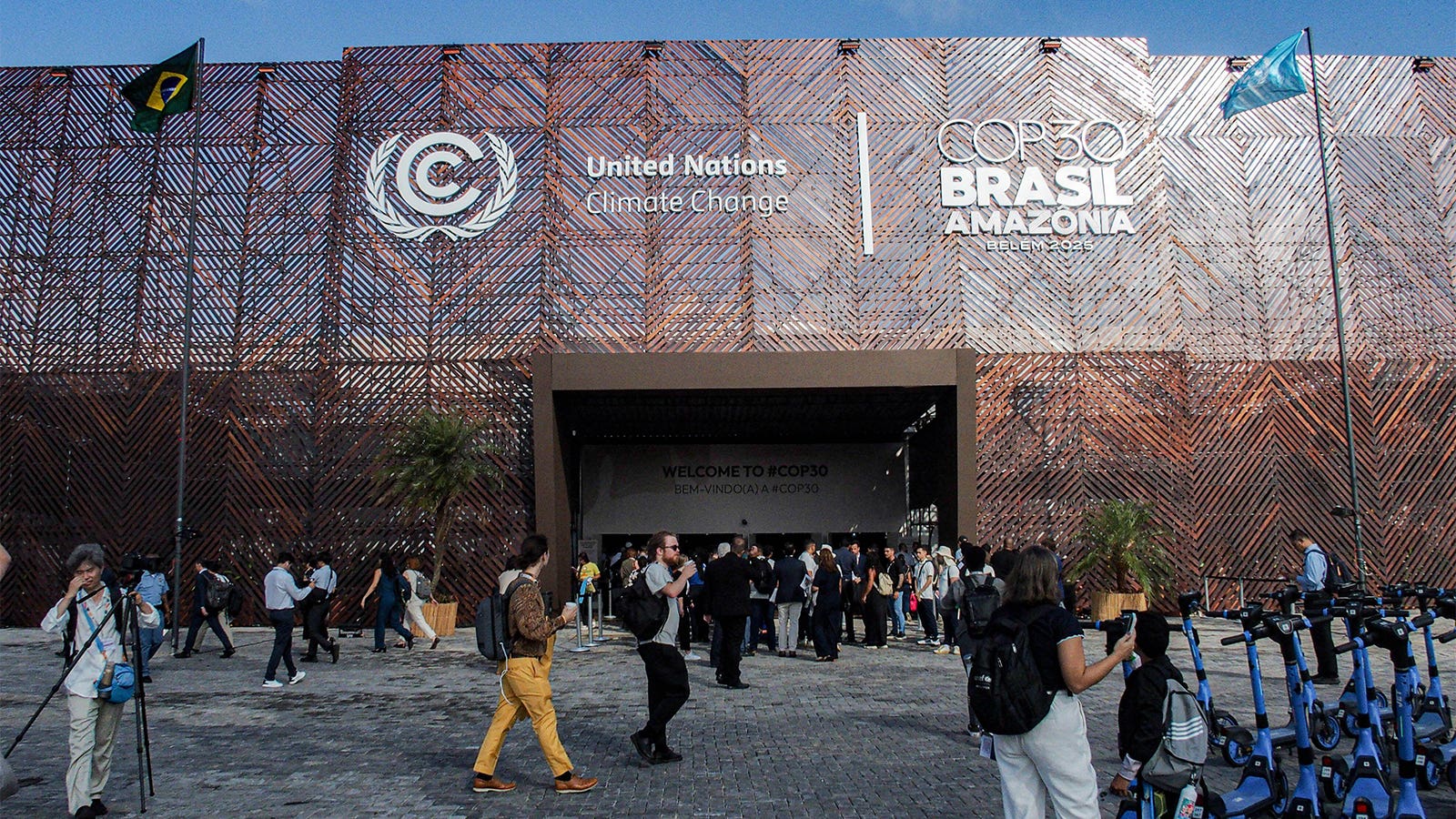
Health professionals from around the globe gathered at the COP30 climate summit in Belém, Brazil, to deliver a compelling message: eliminating fossil fuels is imperative to safeguard human health and preserve lives worldwide.
“Eliminating fossil fuels isn’t a choice—it’s a vital necessity for securing a cleaner and healthier tomorrow,” emphasized Gustavo Henrique Nicoletti Dalle Cort, who serves as the liaison officer for public health matters within the International Federation of Medical Student Associations. As a medical student at Brazil’s Federal University of Parana, he passionately urged, “We call for swift and decisive measures to ensure that every individual on the planet enjoys the fundamental right to a safe and healthy existence. The time to act is right now.”
The COP30 summit, formally known as the Conference of the Parties, brings together representatives from nations that ratified the 1992 United Nations Framework Convention on Climate Change. Notably, the United States has opted out of this year’s event.
Gillian Adynski, RN, PhD, a clinical associate at the Duke University School of Nursing in Durham, North Carolina, shared vivid insights from her frontline experience as a hospital nurse in the southeastern U.S. “It’s astonishing how quickly healthcare systems can reach breaking point, even in affluent, resource-rich environments,” she observed.
Adynski, speaking on behalf of the International Council of Nurses, painted a stark picture of daily challenges. “Even on routine days, nurses often forgo basic breaks like bathroom visits—that’s the unvarnished truth before factoring in climate-related strains,” she explained. “Picture this scenario amplified by a surge in asthma episodes, worsening chronic obstructive pulmonary disease flare-ups, and severe respiratory issues triggered by wildfire smoke and contaminated air. Emergency departments, already operating at full capacity, would be inundated. These vulnerable healthcare infrastructures simply aren’t equipped to manage the escalating caseload and intricate nature of climate-induced health crises.”
She underscored the urgency of fossil fuel elimination, stating, “Only by phasing out fossil fuels can we avert the total breakdown of health systems overwhelmed by climate pressures. Each year of inaction escalates the tally of climate-linked illnesses, heat-induced fatalities, catastrophic weather events, outbreaks of infectious diseases, destruction of medical infrastructure, and unbearable strain on overworked nursing and healthcare personnel.” Adynski warned further, “As long as coal, oil, and natural gas fuel both pollution and global temperature rises, these threats will outpace any adaptive capacity of health systems, regardless of their funding levels.”

Gillian Adynski, RN, PhD, from Duke University, highlighted that health systems remain unprepared for the intensified scale and intricacy of diseases tied to climate change.
Courtney Howard, MD, an emergency medicine specialist based in Yellowknives Dene Territory in Canada’s subarctic region, recounted the harrowing impact of the 2023 Canadian wildfires. “These blazes necessitated the complete evacuation of our 100-bed subarctic hospital,” she revealed. “This facility houses the sole CT scanner across a vast swath of central Canada, serving a population stretching into the high Arctic over territory exceeding the combined size of France and Spain.”
Howard detailed the logistical nightmare: “A military aircraft had to be deployed to transport our patients to Vancouver, incurring enormous expenses for both healthcare delivery and system finances.” She added a global dimension, noting, “The smoke from these wildfires circled the planet, subjecting more than 354 million individuals to harmful particulate pollution and contributing to over 82,000 deaths, as documented in a September study published in Nature.”
Regarding the Belém Health Action Plan unveiled at the summit, Howard acknowledged its merits while issuing a sobering caveat. “This plan offers valuable guidance on fortifying health systems against climate change, but I must stress that even wealthy nations cannot sustainably adapt to our current emissions path,” she asserted. “Critical supply chains, essential infrastructure, and the dedicated care workforce will inevitably deteriorate. To shield public health and healthcare frameworks, we must slash greenhouse gas emissions without delay.”
Drawing from a report by the Global Climate and Health Alliance, Howard elaborated on fossil fuels’ pervasive harm. “This document meticulously outlines the health consequences across the fossil fuel lifecycle—from extraction and transportation through combustion and waste disposal. Coal, oil, and gas inflict localized toxic effects, manifesting in reproductive disorders, preterm births, neurological disorders, dementia, heart disease, various cancers, and beyond.”
In closing, Howard advocated for progress: “We now possess more sustainable alternatives for energy and operations. It’s incumbent upon policymakers and industry leaders to recognize that strategic policies can preserve lives. We urgently need them to implement these changes, ensuring healthcare stability so that medical experts can continue their vital work of saving lives through clinical care.”

Joe Vipond, MD, past president of the Canadian Association of Physicians for the Environment, points out that Canada is advancing fossil fuel phaseout, particularly with coal, as a replicable strategy.
While the prospect of phasing out fossil fuels may seem overwhelming, it’s entirely feasible, according to Joe Vipond, MD, an emergency physician and former leader of the Canadian Association of Physicians for the Environment (CAPE). “In Canada, we’ve successfully initiated fossil fuel reductions,” he noted. “Specifically, we’ve targeted coal—admittedly not comprehensive, but a blueprint worth emulating elsewhere. The rationale is compelling: financial savings, climate mitigation, and profound health advantages.”
Vipond outlined the implementation: “The coal phaseout commenced in Ontario from 2005 to 2014, followed by Alberta, and it’s presently underway in Saskatchewan. Collectively, these efforts will curb 15% of Canada’s total emissions.”
Leah Temper, PhD, director of CAPE’s health and economic policy program, made an impassioned appeal to COP30 participants. “World leaders, you hold the lungs of the planet in your grasp,” she declared. “We implore you to commit to bold action and forge a precise, unwavering roadmap forward.”